Blueprint Audit
The diagnosis your website has never had. The roadmap your Board actually needs.
A 2–3 week strategic and technical diagnostic for established NGOs. I investigate what's actually failing across performance, accessibility, SEO, AEO, and CMS architecture, and deliver a focused report your leadership can act on with confidence. £2,500. You own everything.
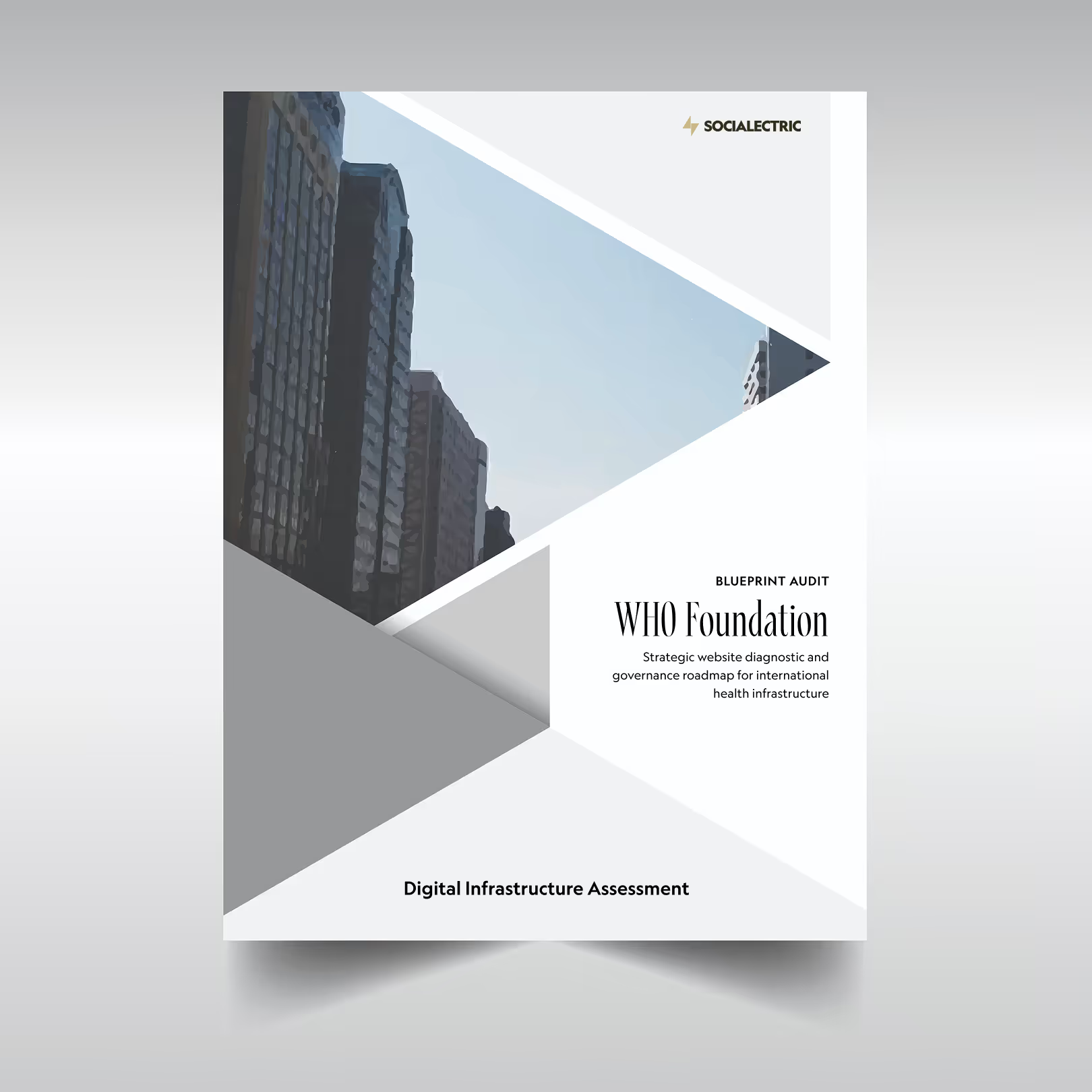

Every NGO website I've audited was built on assumptions. The wrong stakeholders were prioritised. Governance requirements were invisible to the designer. Accessibility was an afterthought bolted on at the end. The result is always the same — a site that looks professional but actively undermines institutional credibility when scrutiny arrives.
The Blueprint Audit prevents that by diagnosing what's actually broken before committing your organisation to an implementation that might solve the wrong problem.
WHY STRATEGY COMES FIRST
The symptoms organisations describe:
Most NGOs waste significant budget building the wrong solution because they skip strategic diagnosis. The Blueprint Audit prevents that by ensuring we understand the institutional problem your website needs to solve — not just the surface symptoms.


These are symptoms. Here's what I actually investigate:
- Is it decision-making (unclear ownership, bottlenecks, internal misalignment)?
- Is it stakeholder confusion (different audiences need different information)?
- Is it institutional complexity (organisation evolved but website hasn't)?
- Is it operational dysfunction (team can't update without technical dependency)?
- Is it credibility erosion (website undermines trust)?
- Is it platform limitations (technology can't support what you need)?
Until we diagnose the actual problem, we're guessing. And guessing with £20,000 is expensive.
"Even when our brief was to 'lift and shift,' Eric found ways to enhance our donor experience and improve our SEO, all within budget." — WHO Foundation engagement, ongoing since 2025
What the Blueprint Audit actually involves
Week 1–2:
Discovery & Diagnosis
Organisational Assessment
One focused stakeholder call (90 minutes) with the people who know the site best: who owns decisions, what the team can and cannot do today, and what success looks like for different audiences. Supported by an async intake questionnaire completed before the call so we do not spend the session on basics.
Investigation areas:
- What organisational changes are coming?
- Where do website decisions break down?
- Who gets nervous when the website has problems?
- What external scrutiny affects your digital presence?
- What does "success" mean for different stakeholders?
Current State Audit
- Technical assessment (what's actually broken vs what just looks dated)
- Content governance analysis (who creates, who approves, what falls through the cracks)
- Workflow and dependency mapping (where your team gets blocked)
- Integration requirements and platform constraints
- WCAG AA accessibility audit (screen reader, keyboard, colour contrast)
- SEO, AEO, and GEO analysis (how you appear in search and AI engines)
Audience Mapping
- Who are the primary audiences and what does each need from the site?
- Where is the current site failing them?
- What are the conversion gaps: donate, apply, contact, register?
- Where does the site create friction instead of confidence?
Week 3
Strategic Recommendations
- Problem Definition — the institutional problem, why it's urgent now, and the cost of doing nothing (framed for Board presentation)
- Platform & Architecture Recommendations — rebuild, migrate, or optimise; why this platform; what you'd gain and what you'd trade off
- Editorial and Content Structure — Who owns which pages, how content gets updated, and how the team can publish independently without technical dependency after the build.
- Implementation Roadmap — sequencing, dependencies, quick wins, and phasing options if budget requires staged investment
- Investment Breakdown — what implementation costs, what drives that cost, and what ongoing stewardship looks like
- 90-Minute Presentation — I present findings to your leadership team, answer questions, and outline clear next steps. You receive the full written report (20–35 pages) and all supporting documentation.
What happens after the Blueprint
The Blueprint Audit stands alone as a deliverable. You own the report, the recommendations, and the roadmap — regardless of whether you continue working with me. Some organisations take the findings to their existing web team. Some use them to brief an agency. Most choose to continue into implementation with me, because the diagnostic creates continuity that's expensive to recreate.
If you continue into implementation, here's what that typically looks like:

Build Phase
Your new Webflow site is designed and developed based on Blueprint recommendations. Stakeholder navigation, accessibility infrastructure, content architecture — all informed by the diagnostic rather than assumptions.
Ongoing partnership
New campaign pages, programme updates, governance documents, performance monitoring. Your website evolves with your organisation through a £2,500/month subscription rather than expensive periodic rebuilds.
The key difference:
Implementation starts from a position of shared understanding. No scope creep, no stakeholder misalignment, no mid-project discovery that changes everything. The Blueprint prevents the problems that make website projects go wrong.
£2,500
Investment
What's included:
- Blueprint Audit report (concise and focused, typically 15-25 pages depending on site complexity)
- One stakeholder findings call (90 minutes, recorded and shared)
- WCAG AA accessibility audit with specific compliance gaps identified
- Stakeholder mapping with prioritisation recommendations
- 90-minute presentation to your leadership team with Q&A
- Implementation roadmap with phased investment options
- Delivered in 2–3 weeks. Fixed price. You own everything.

Who needs a Blueprint Audit
The Blueprint Audit is designed for established NGOs where:
- You are planning meaningful investment in your website and want to be certain you are building the right thing
- Multiple stakeholders have different — sometimes competing — views on what the website should do
- The organisation is facing transition (leadership change, merger, funding growth, strategic pivot)
- The current website was built without governance oversight and it shows
- Previous "fixes" failed because they addressed symptoms rather than structural problems
- You're operating under scrutiny from donors, regulators, media, or the public
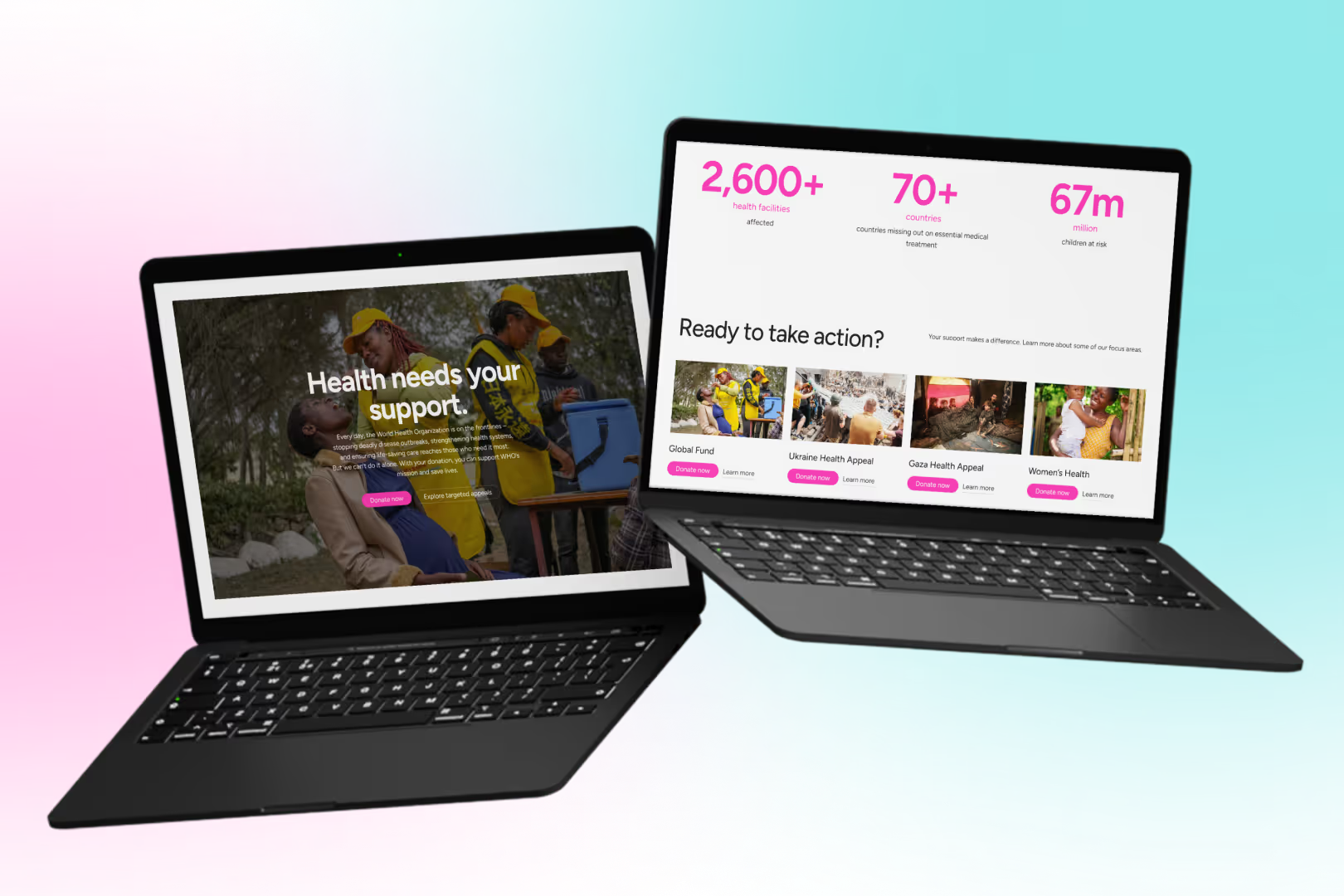
WHO Foundation
Diagnostic identified navigation consuming 30% of viewport, accessibility gaps creating institutional compliance exposure, and absent governance infrastructure during Guardian media scrutiny. Implementation tripled organic traffic, closed accessibility gaps, and gave the communications team editorial independence on Webflow.
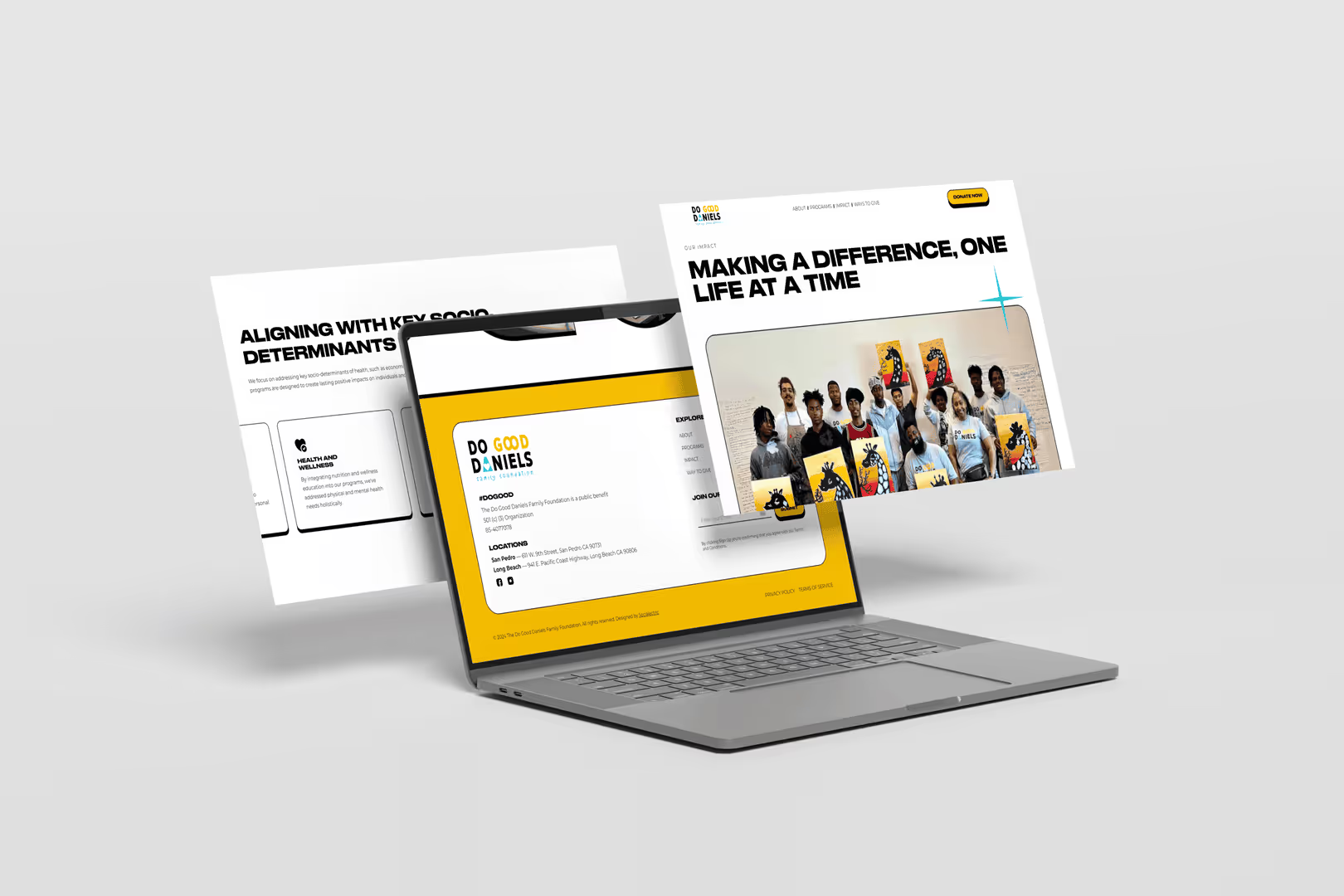
Do Good Daniels Foundation
Diagnostic identified Wix platform limitations preventing donation infrastructure scaling and content governance breakdown. Webflow migration enabled integrated Donorbox/Stripe processing and team independence. Retained for three additional projects.
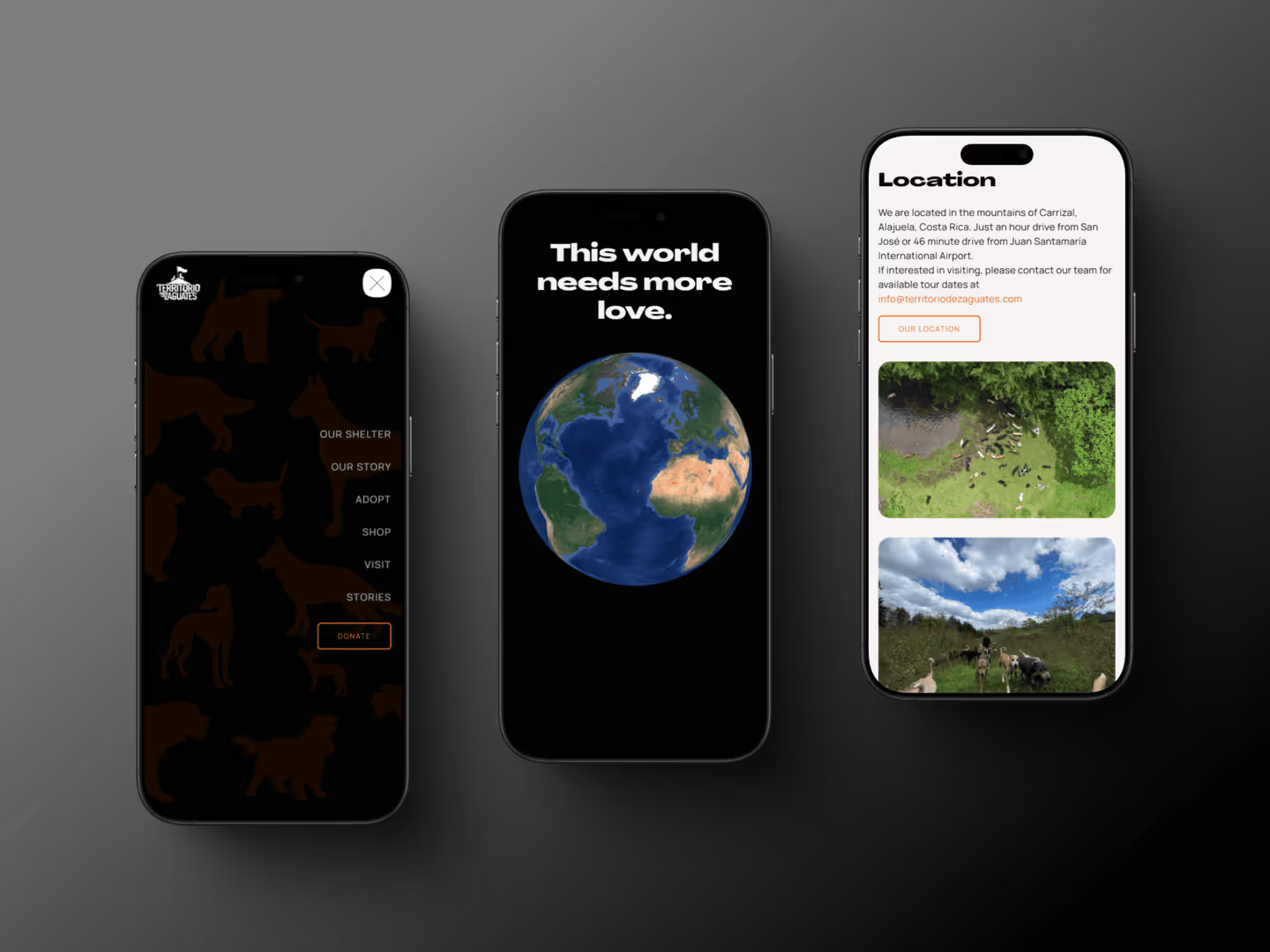
Territorio de Zaguates
Diagnostic identified cross-border fundraising friction and operational dependency on IT staff for content updates. Implementation created multi-currency donation infrastructure and freed sanctuary operations from web management.
Questions from NGO decision-makers
Skipping diagnosis leads to building the wrong thing, scope creep, stakeholder misalignment, and budget overruns. The Blueprint prevents all of this by giving us a clear, shared understanding of what needs to be built before a single decision is made.
Great—that accelerates the Blueprint. I'll review what you've done, identify gaps, and focus where it's most valuable.
No. The Blueprint is already the minimum viable diagnostic for organisations at this complexity level.
If £2,500 feels steep, your organisation might be better suited to simpler approaches.
For smaller organisations or simpler sites, I can discuss whether a lighter technical review is more appropriate. Get in touch and I will be honest about the right fit.
We work with whoever is accessible and document the constraint. Limited stakeholder access doesn't prevent proceeding—it clarifies assumptions and where risk exists.
The Blueprint Audit is designed to produce Board-ready documentation. The report includes governance rationale, risk assessment, and implementation options with investment ranges — exactly the information Trustees need to make an informed decision. Many organisations use the Blueprint output to secure Board endorsement for the full implementation investment.
Everything. The full written report, stakeholder mapping, accessibility audit findings, implementation roadmap, and all supporting documentation. If you choose to work with a different consultant for implementation, you take the Blueprint with you. There's no lock-in.
Yes. The deliverable is yours. I've designed the Blueprint to be useful regardless of who implements it — clear documentation, specific recommendations, evidence-based prioritisation. That said, most organisations choose to continue with me because the diagnostic creates context and continuity that's expensive to recreate with someone new.
Then I'll tell you. If targeted remediation achieves what you need for a fraction of the cost, that's what I'll recommend. The Blueprint exists to find the right answer, not to justify a predetermined outcome. I've recommended against full rebuilds when the diagnostic didn't support one.
Ready to stop guessing?
A 30-minute conversation is enough to determine whether the Blueprint Audit is the right starting point for your organisation. I'll be honest if it isn't.